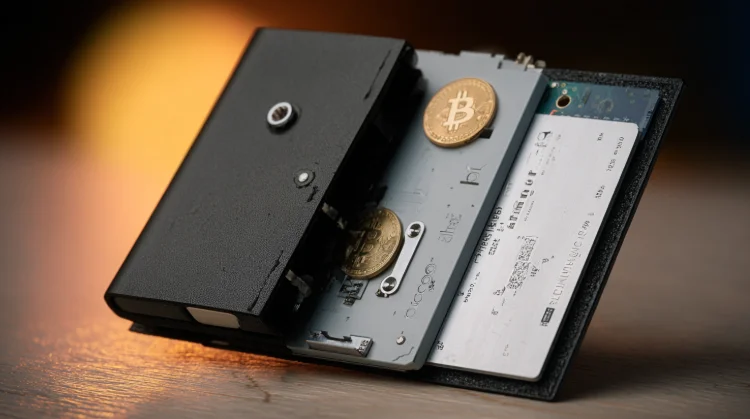
What is Ledger Wallet and how it works
Ledger Wallet operates as a dedicated microcomputer executing cryptographic operations on ST33 chip certified to CC EAL5+ standard. The Ledger Crypto Wallet isolates private keys from connected computers and smartphones permanently. Ledger Live application transmits unsigned transaction data via encrypted USB or Bluetooth channels. The hardware wallet displays recipient address, amount, and network fee on 128x64 pixel screen for verification. Physical button press generates signature inside Secure Element. Malware on host devices cannot authorize transfers without physical access. Firmware updates require cryptographic verification before installation.
Ledger Wallet definition for beginners
Ledger Wallet stores private keys proving cryptocurrency ownership on tamper-resistant hardware. Crypto Ledger Wallet setup takes 15 minutes including 24-word recovery phrase backup. Learn more about protecting your recovery phrase in our security section. The device screen shows transaction details in readable format: destination address, transfer amount, gas fees. Users confirm by pressing right button or reject with left button. Easy to use interface requires no blockchain technical knowledge. Best for beginners transitioning from exchange custody to self-storage. Newbie users receive step-by-step guidance through Ledger Live onboarding process. The wallet app automatically detects connected device model and installs required blockchain applications.
How Ledger Wallet stores private keys
Ledger Wallet private keys generate inside Secure Element during initial setup using true random number generator. The Ledger Hardware Wallet performs all cryptographic calculations internally, outputting only mathematical signatures. Keys never exist in computer memory or transmit over communication channels. AES-256 encryption protects data at rest within the chip. Elliptic curve operations (secp256k1 for Bitcoin, Ed25519 for Solana) execute in isolated environment. Physical extraction requires equipment costing $1M+ and cleanroom facilities. Side-channel attack protections include power consumption masking and electromagnetic emission shielding. Kudelski Security audit confirmed zero key leakage vectors in 2024 assessment.
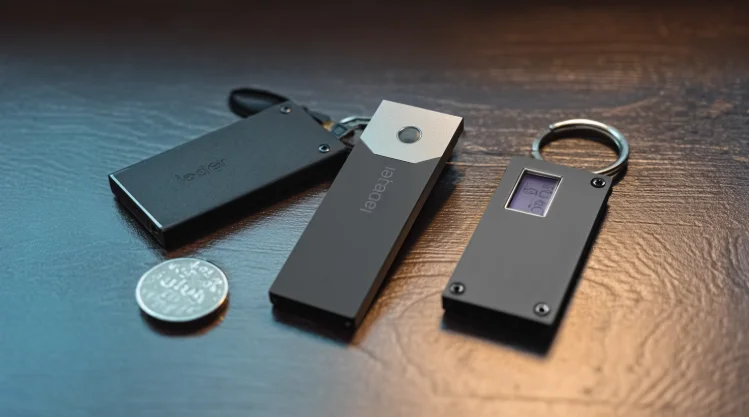
Ledger Hardware Wallet as the core of security
The Ledger Hardware Wallet creates physical separation between private keys and internet-connected systems. Crypto Ledger devices contain ST33K1M5 chip meeting banking and government ID card standards. Attack surface reduces from millions of potential OS vulnerabilities to audited firmware codebase under 500KB. The company maintains 20+ person Ledger Donjon security research team conducting continuous penetration testing. French CSPN certification validates hardware tamper resistance through independent government laboratory testing. SlowMist research documented zero successful key extraction attacks against Ledger devices in 2025, while software wallet compromises totaled $340M losses.
What makes a hardware wallet different
Ledger Hardware Wallet executes only signed firmware with single purpose: protecting cryptographic material. Crypto Ledger devices cannot browse websites, download files, or run arbitrary code. Standard computers process thousands of simultaneous tasks, any potentially containing malicious code. Hardware wallets eliminate this attack vector through architectural isolation.
| Feature | Hardware Wallet | Software Wallet |
|---|---|---|
| Key Storage | Secure Element chip | Computer/phone memory |
| Internet Connection | None (air-gapped) | Always connected |
| Malware Vulnerability | Physical access required | Remote exploitation possible |
| Transaction Signing | On-device verification | Screen spoofing possible |
| 2025 Losses (SlowMist) | $0 from key extraction | $340M+ |
Secure Element chip explained
Ledger Hardware Wallet security relies on ST33K1M5 chip from STMicroelectronics certified CC EAL5+. This component originates from banking card and passport chip technology. Physical tamper protections include: mesh sensors detecting drilling (triggers data wipe), voltage monitors identifying power analysis attacks, light sensors erasing memory if package opens. The chip stores keys encrypted using device-unique master key. Side-channel countermeasures prevent electromagnetic emission analysis and power consumption pattern attacks. Each chip receives unique ID during manufacturing enabling firmware authenticity verification. Counterfeit detection occurs automatically during Ledger Live connection.
Ledger Cold Wallet explained
Ledger Cold Wallet keeps private keys disconnected from network-accessible systems permanently. Cold storage represents cryptocurrency security gold standard recommended by Coinbase, Kraken, and Binance for holdings exceeding $10,000. Hot wallets prioritize transaction speed, accepting internet exposure risks. Cold wallets sacrifice convenience for elimination of remote attack vectors. Ledger devices bridge this gap: keys remain cold inside Secure Element while signing capability travels via encrypted channel. The device contains no WiFi antenna, cellular modem, or direct internet connectivity.
What cold storage means in crypto
Cold storage crypto methodology isolates private keys from online systems. The Ledger Cold Wallet implements this through dedicated hardware rather than paper printouts or air-gapped computers. Traditional paper wallets required importing keys to connected devices for each transaction, creating temporary hot wallet exposure. Hardware wallets solve this: keys stay permanently cold, only signatures travel externally. Industry data indicates 78% of crypto holdings above $100,000 utilize cold storage. Institutional custody solutions from Fidelity, BlackRock, and Grayscale employ similar Secure Element technology. The architectural split enables cold storage security with 30-second transaction signing speed.
Why Ledger Cold Wallet stays offline
Ledger Cold Wallet security depends on absolute separation between keys and network-accessible memory. Communication occurs exclusively through USB-C cable or Bluetooth 5.0 to host device running Ledger Live. Transaction data and signatures traverse this connection. Private keys cannot transmit regardless of commands received because hardware lacks export capability at chip architecture level. Even compromised Ledger Live software cannot extract keys.
| Connection Type | Data Transferred | Key Exposure |
|---|---|---|
| USB-C | Transaction data, signatures | None |
| Bluetooth 5.0 | Transaction data, signatures | None |
| NFC (Stax only) | Device pairing | None |
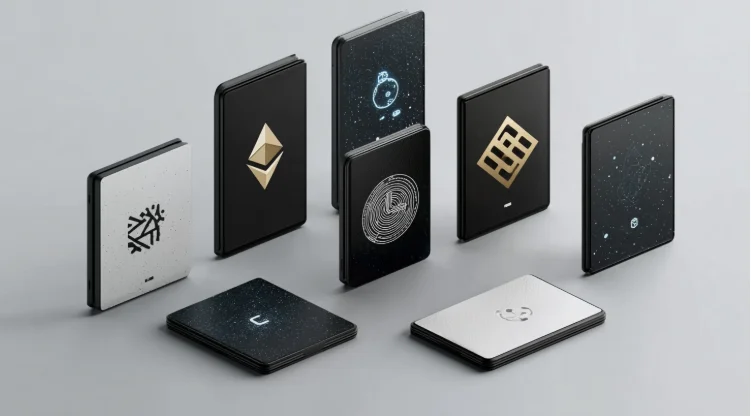
Supported cryptocurrencies on Ledger Wallet
The Ledger Crypto Wallet ecosystem supports 5,500+ digital assets across 50+ blockchain networks. Crypto Ledger Wallet users install dedicated applications for each network through Ledger Live manager. Nano S Plus stores 100 apps simultaneously, Nano X stores 100 apps, Stax stores 100 apps. Open-source SDK enables community developers to add new coin support. Hardware signing functions identically across all assets: same Secure Element protection for Bitcoin and meme tokens.
| Network | Native App | Token Standards | Max TPS |
|---|---|---|---|
| Bitcoin | Yes | Ordinals, BRC-20 | 7 |
| Ethereum | Yes | ERC-20, ERC-721, ERC-1155 | 15-30 |
| Solana | Yes | SPL | 65,000 |
| Polygon | Yes | ERC-20, ERC-721 | 7,000 |
| Cardano | Yes | Native tokens | 250 |
| Avalanche | Yes | ARC-20 | 4,500 |
Bitcoin, Ethereum and major networks
Bitcoin Ledger integration implements BIP-32/39/44 standards for hierarchical deterministic key generation. Ledger Crypto Wallet supports SegWit (bc1), Legacy (1), and Taproot (bc1p) address formats. Ethereum app handles ETH transfers, smart contract interactions, EIP-712 typed message signing, and EIP-1559 gas estimation. Native staking integration: Lido (ETH), Everstake (SOL), Chorus One (ATOM). Layer-one support includes Solana (SPL tokens, NFTs), Cardano (ADA staking, native tokens), Polkadot (DOT nomination), Cosmos (IBC transfers). Each blockchain app occupies 2-30KB device storage depending on complexity.
Tokens, NFTs and multichain assets
Crypto Ledger Wallet automatically detects ERC-20 tokens after blockchain confirmation, displaying balances in Ledger Live portfolio. Manual token addition available via contract address input. NFT management features: gallery view with metadata display, OpenSea/Blur marketplace integration, batch transfer signing. Supported NFT standards: ERC-721, ERC-1155 (Ethereum), SPL NFTs (Solana), CNFTs (Cardano). Multichain assets including WBTC, USDC, USDT function across 12 networks with unified interface. Clear signing displays human-readable NFT transaction details rather than raw hexadecimal data. 2025 update added support for Bitcoin Ordinals inscriptions and BRC-20 tokens.
How Ledger Wallet works with Ledger Live
Ledger Live functions as interface software for every Ledger Wallet device, available on Windows, macOS, Linux, iOS, and Android. The application handles portfolio tracking, transaction construction, blockchain queries, and broadcast services. Ledger Wallet hardware performs all cryptographic signing operations. Separation of concerns: Ledger Live never accesses private keys. Version 2.70+ includes integrated Web3 browser, DeFi protocol connections (Aave, Compound, Uniswap), and NFT marketplace access. Download size: 150MB desktop, 80MB mobile. Monthly active users: 1.5M+.
Role of Ledger Live in wallet management
Ledger Live aggregates balances across all supported networks in unified portfolio view with USD/EUR/BTC valuations. The Ledger Wallet ecosystem provides: transaction history export (CSV format), address book management, custom account labels. Buy/sell integration through MoonPay, Coinbase Pay, Banxa, Sardine enables fiat on-ramps (1-5% fees vary by provider). Staking dashboard shows: validator selection, reward tracking, compound options for ETH/SOL/ATOM/DOT. Firmware updates distribute through Ledger Live with cryptographic verification. App installation manager displays storage usage and available blockchain applications. Portfolio analytics include: 24h/7d/30d/1y performance charts, asset allocation breakdown.
Why Ledger Live cannot access keys
Ledger Live security architecture implements hardware-enforced boundaries preventing key export. The application communicates through APDU (Application Protocol Data Unit) commands defined in public documentation. Export commands do not exist in Secure Element firmware. Physical button press requirement adds second verification layer beyond software control. Even complete Ledger Live compromise through malware injection or supply chain attack cannot extract keys. GitHub repository (github.com/LedgerHQ) contains full source code for independent verification. Security researchers audit codebase continuously; 50+ contributors maintain active development.
Signing process flow:
- Ledger Live constructs unsigned transaction
- Data transmits to hardware via USB/Bluetooth
- Device displays details on screen
- User verifies and presses buttons
- Secure Element generates signature internally
- Signature returns to Ledger Live for broadcast
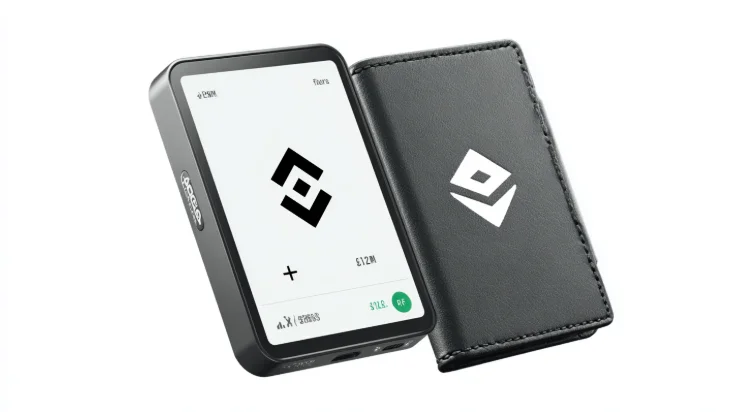
Ledger Wallet vs exchanges
Ledger Wallet enables self-custody: users control private keys directly without third-party involvement. Crypto Ledger devices eliminate counterparty risk inherent in exchange storage. Exchange failures destroyed billions in customer funds: Mt. Gox ($450M, 2014), QuadrigaCX ($190M, 2019), FTX ($8B+, 2022). Hardware wallet users remained unaffected because assets never resided on exchange servers. Blockchain ownership requires private key control. Exchange balances represent IOUs, not actual on-chain assets.
Risks of keeping crypto on exchanges
Crypto exchange risks span multiple categories beyond insolvency. Recent incidents: Bybit hack ($230M, February 2024), WazirX breach ($234M, July 2024), DMM Bitcoin theft ($305M, May 2024). Regulatory actions freeze accounts without warning: Binance restrictions affected users in 10+ jurisdictions during 2023-2024 enforcement.
| Risk Category | Example | User Recourse |
|---|---|---|
| Hack/Breach | WazirX 2024 | Creditor claims (years) |
| Insolvency | FTX 2022 | Bankruptcy proceedings |
| Regulatory Freeze | Binance 2023 | Legal action |
| Account Restriction | Trading halts | None |
| SIM Swap Attack | Individual targeting | Limited |
Self-custody vs custodial wallets
The Ledger Wallet vs exchange comparison highlights fundamental tradeoffs. Custodial advantages: password recovery, customer support, familiar interfaces. Self-custody advantages: censorship resistance, bankruptcy protection, 24/7 access regardless of company status. Bitcoin principle: "not your keys, not your coins." Ledger bridges usability gap through hardware security with software convenience. Optional Ledger Recover service ($9.99/month) provides backup for users uncomfortable with sole recovery phrase responsibility. Self-custody statistics: 23% of Bitcoin supply held on exchanges (down from 17% in 2020), indicating migration toward self-storage.
Who should use Ledger Wallet
Ledger Wallet serves cryptocurrency holders above $1,000 portfolio value where hardware investment ($79-279) represents <10% insurance cost. For more information, see our guide on Ledger Hardware Wallet security and supported cryptocurrencies. The question why you need the newest Ledger Wallet resolves through feature comparison: Nano S Plus (2022) added 1.5x storage, USB-C, larger screen versus original Nano S. Security technology advances while attack sophistication escalates. Device cost represents one-time expense protecting potentially unlimited asset value. ROI calculation: $79 device protecting $10,000 portfolio = 0.79% cost versus average 5.4% annual software wallet loss rate.
Long-term crypto investors
Ledger Wallet for investors pursuing multi-year strategies eliminates exchange dependency during market cycles. Bear markets historically trigger exchange insolvencies (Celsius, Voyager, BlockFi in 2022). Recovery phrase system ensures access persists regardless of Ledger company status: BIP-39 standard compatible with 100+ wallet implementations. Dollar-cost averaging, retirement allocations (Bitcoin IRAs), generational wealth transfer benefit from self-custody permanence. Long-term holder statistics: 69% of Bitcoin unmoved for 1+ year (Glassnode data), indicating strong HODLer preference for cold storage solutions.
High-value portfolio holders
Crypto Ledger Wallet becomes essential above $100,000 portfolio thresholds. Security consultants recommend: single device for <$100K, multiple devices with geographic distribution for $100K-$1M, multisignature arrangements for $1M+. High-value portfolios attract targeted attacks: SIM swap, social engineering, physical coercion.
| Threat | Ledger Feature | Implementation |
|---|---|---|
| Targeted phishing | Clear signing | Human-readable transaction display |
| Physical coercion | Hidden wallet | Passphrase-protected secondary accounts |
| Single point failure | Multisig support | Multiple devices required for signing |
| Geographic risk | Shamir backup | Distributed recovery phrase fragments |

Ledger Wallet security best practices
Ledger Wallet security combines hardware capabilities with user operational discipline. The question is Ledger Wallet still safe in 2026 receives affirmative answer contingent on proper protocol adherence. Ledger Wallet Security Model assumes adversarial environments where attackers target human factors. Technical hardware defenses remain robust: zero successful Secure Element extractions documented. Primary 2025 threat vectors: phishing websites (73% of reported losses), fake device sales (12%), social engineering (9%), physical theft (6%). Security requires partnership between well-designed hardware and informed user behavior.
Protecting recovery phrase
The Ledger recovery phrase (24 words from BIP-39 wordlist) enables complete wallet reconstruction on any compatible device. Protection requirements exceed device security.
| Method | Fire Resistant | Water Resistant | Cost |
|---|---|---|---|
| Paper (provided sheets) | No | No | $0 |
| Cryptosteel Capsule | 1400°C | Yes | $79 |
| Billfodl | 1200°C | Yes | $99 |
| Safe deposit box | Varies | Varies | $50-300/year |
Critical rules: never photograph phrase, never store digitally, never enter on websites, never share with support staff. Advanced users implement Shamir Secret Sharing (SLIP-39) splitting phrase into 3-of-5 fragments for geographic distribution.
Avoiding phishing and fake Ledger sites
Fake Ledger Wallet websites constitute primary attack vector with 73% of 2025 reported losses. Attackers purchase similar domains: ledgerwallet[.]com, ledger-live[.]com, mylegder[.]com. Phishing tactics request recovery phrase entry for: firmware updates, security verification, airdrop claims.
| Indicator | Legitimate | Phishing |
|---|---|---|
| Domain | ledger.com only | Variations/typos |
| Recovery phrase request | Never online | Always requests |
| SSL certificate | EV certificate | DV or none |
| Download source | ledger.com/download | Third-party links |
Device screen displays transaction destinations that phishing cannot modify. Always verify: computer screen address matches hardware display exactly before confirmation.
Common misconceptions about Ledger Wallet
Ledger Wallet operates differently than intuitive assumptions suggest. Cryptocurrencies exist as blockchain transaction records, not transferable files. Understanding architectural reality clarifies device capabilities and limitations. Educational resources available at Ledger Academy (ledger.com/academy) address common confusion with 200+ articles in 8 languages. Clearing misconceptions enables informed security decisions and realistic expectations.
Ledger stores my crypto (myth)
The Ledger Wallet myth that devices contain cryptocurrency contradicts blockchain architecture. Coins exist exclusively as distributed ledger entries replicated across 50,000+ Bitcoin nodes and 500,000+ Ethereum nodes. Hardware stores private keys: 256-bit numbers proving ownership and authorizing transfers. Device loss with intact recovery phrase backup: funds remain accessible through wallet restoration on replacement hardware or compatible software. Recovery phrase compromise: funds accessible to attacker regardless of device possession. The private key generates addresses (public) where coins arrive and signatures (cryptographic proof) permitting coins to leave. Nothing physical transfers during cryptocurrency transactions.
Ledger can recover lost crypto (myth)
The Ledger Bitcoin recovery misconception assumes company involvement contradicting self-custody architecture. Ledger servers store zero information about: wallet contents, transaction histories, recovery phrases, account balances. No account recovery process exists because no accounts exist on company infrastructure. Lost recovery phrase = permanently inaccessible funds. This represents feature not bug: if Ledger could recover wallets, hackers compromising their systems could too. Support staff cannot assist with: balance inquiries, transaction reversals, phrase recovery. Optional Ledger Recover service ($9.99/month) provides encrypted phrase backup through identity-verified shards distributed across three companies (Ledger, Coincover, EscrowTech). Traditional self-custody users maintain complete independence.
Get Your Ledger Wallet
Buy Ledger Wallet to secure cryptocurrency holdings with hardware protection trusted by 6M+ users and $15B+ in protected assets. Get Your Ledger device from official channels ensuring authenticity and 2-year warranty coverage.
| Model | Price | Screen | Connection | Storage |
|---|---|---|---|---|
| Nano S Plus | $79 | 128x64 px | USB-C | 1.5MB (100 apps) |
| Nano X | $149 | 128x64 px | USB-C + Bluetooth | 2MB (100 apps) |
| Stax | $279 | 400x672 px E Ink touch | USB-C + Bluetooth + NFC | 1.5MB (100 apps) |
Why buying official Ledger matters
Buy Ledger Wallet exclusively from ledger.com or authorized retailers (Amazon "Ships from and sold by Ledger", Best Buy, JB Hi-Fi). Supply chain attacks through third-party sellers documented: pre-initialized devices with attacker-known recovery phrases, modified firmware with backdoors, repackaged used devices. Authenticity verification process:
- Tamper-evident packaging seal intact
- Ledger Live performs genuine check during setup
- Device generates fresh recovery phrase (never pre-printed)
- Firmware signature verification passes
Counterfeit indicators: pre-filled recovery phrase card, discounted pricing below MSRP, non-official seller, damaged security seal. Savings on unauthorized purchases never justify portfolio risk exposure.
Ledger Wallet for US users
Get Your Ledger through ledger.com with domestic US fulfillment from Atlanta distribution center. Shipping: free standard (5-7 days), express available ($15-25). Payment methods: credit/debit cards, PayPal, Apple Pay, Google Pay, cryptocurrency (BTC, ETH, USDC). No import duties or customs delays for US addresses. Regulatory status: hardware wallets classified as general-purpose cryptographic devices, no registration requirements, no purchase restrictions. Tax implications: device purchase not reportable, cryptocurrency transactions require standard reporting (Form 8949, Schedule D). Ledger Live integrates with CoinTracker, Koinly, TaxBit for automated tax report generation. US customer support: English language, business hours coverage, support.ledger.com ticket system.
Buy Ledger Wallet NowFrequently Asked Questions
Ledger Wallet is a secure hardware crypto wallet designed for safe cold storage of digital assets. It stores private keys on tamper-resistant hardware, isolating them from internet-connected devices.
Ledger Wallet operates as a dedicated microcomputer executing cryptographic operations on a Secure Element chip. It displays transaction details on its screen for verification, and requires physical button presses to confirm transactions.
Yes, Ledger Wallet is considered one of the safest ways to store cryptocurrencies. It uses a Secure Element chip certified to CC EAL5+ standard, and zero successful key extraction attacks have been documented.
Ledger supports 5,500+ digital assets across 50+ blockchain networks, including Bitcoin, Ethereum, Solana, Polygon, Cardano, and many others.
No, Ledger cannot recover lost crypto. If you lose your recovery phrase, your funds are permanently inaccessible. This is by design to ensure true self-custody.
Ledger wallets range from $79 (Nano S Plus) to $279 (Stax). The price depends on the model and features you choose.